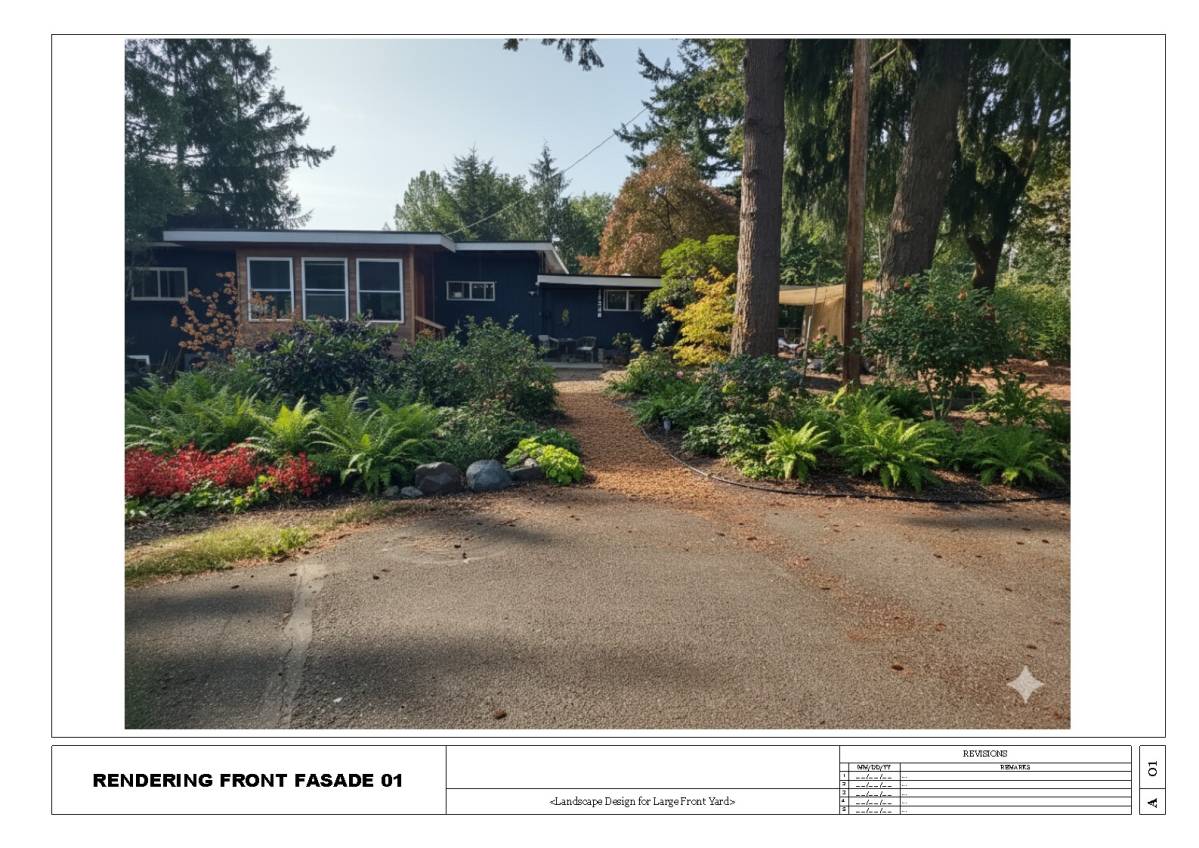
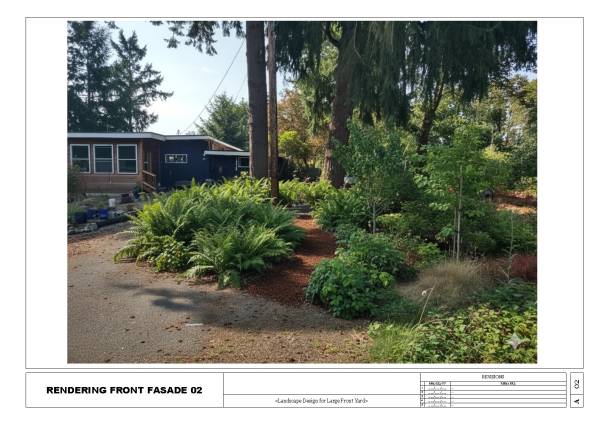
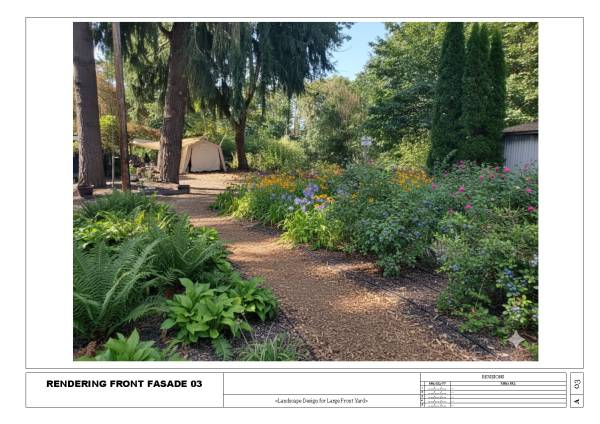
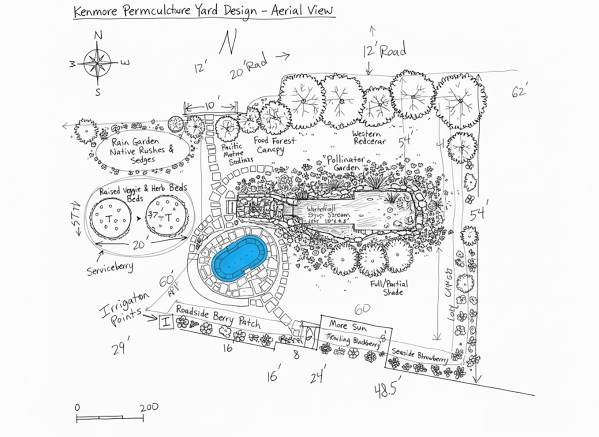
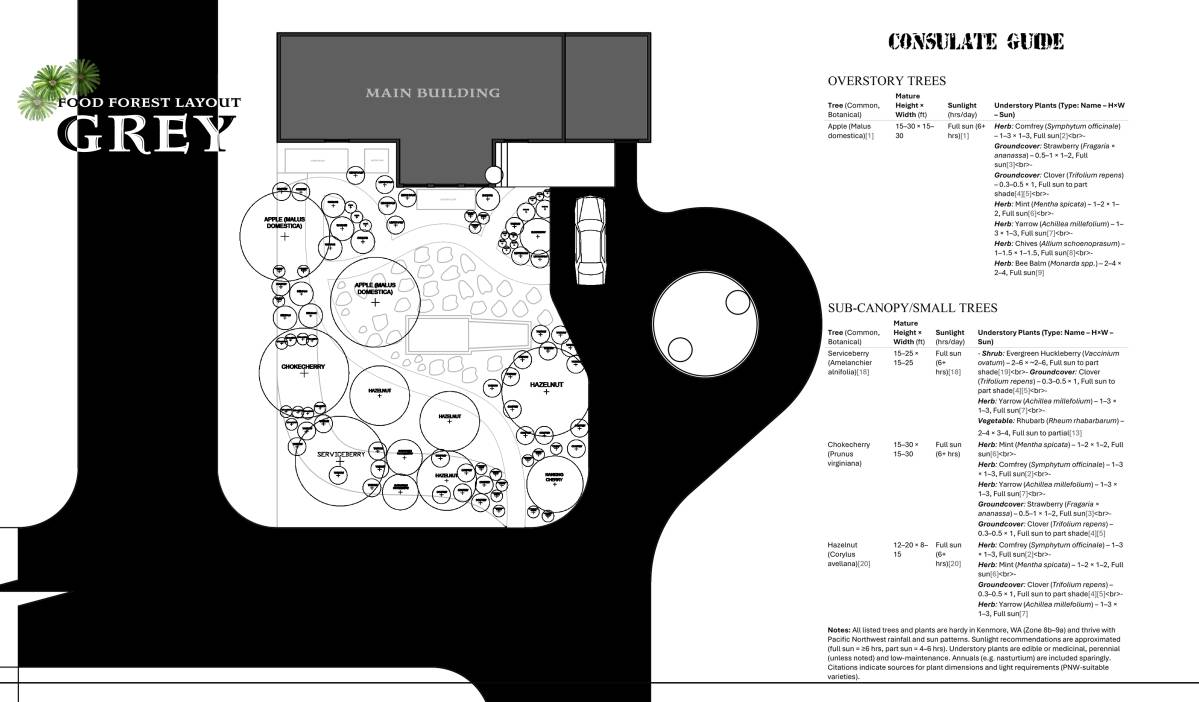
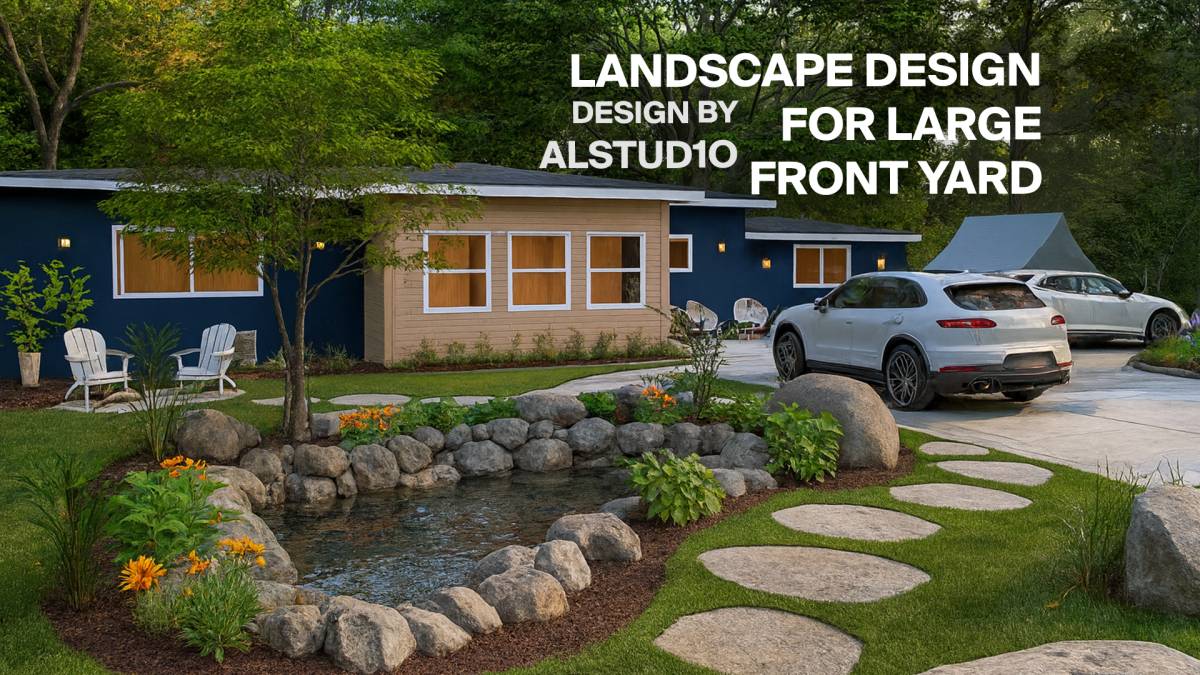
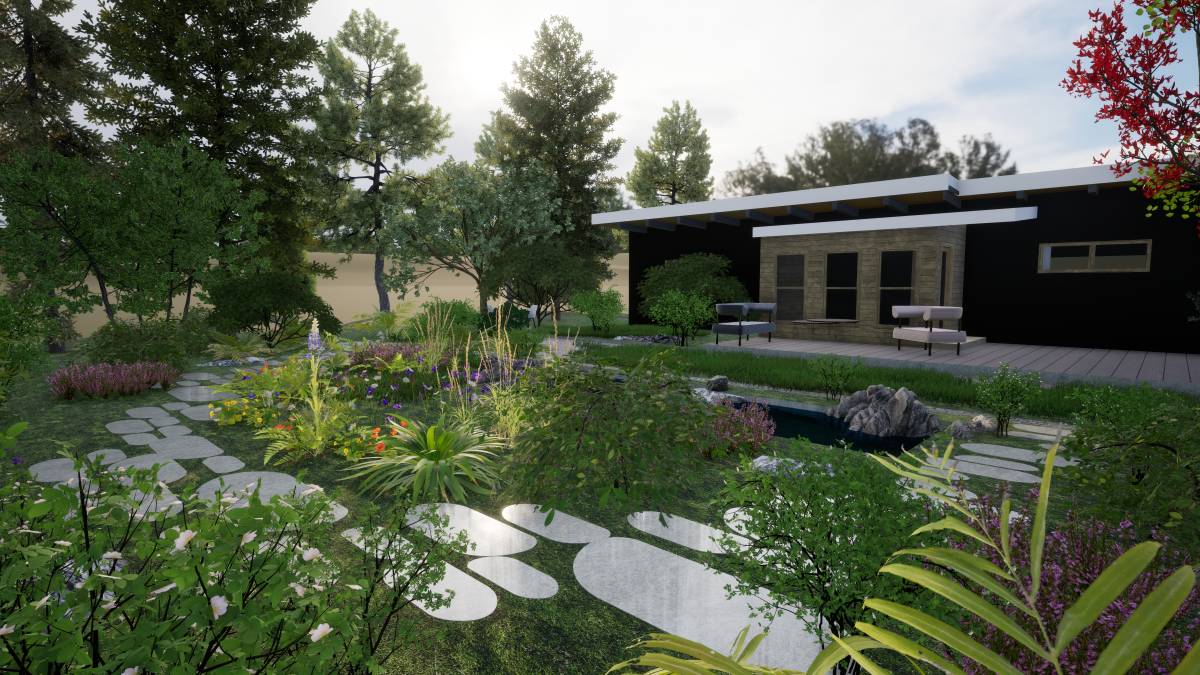
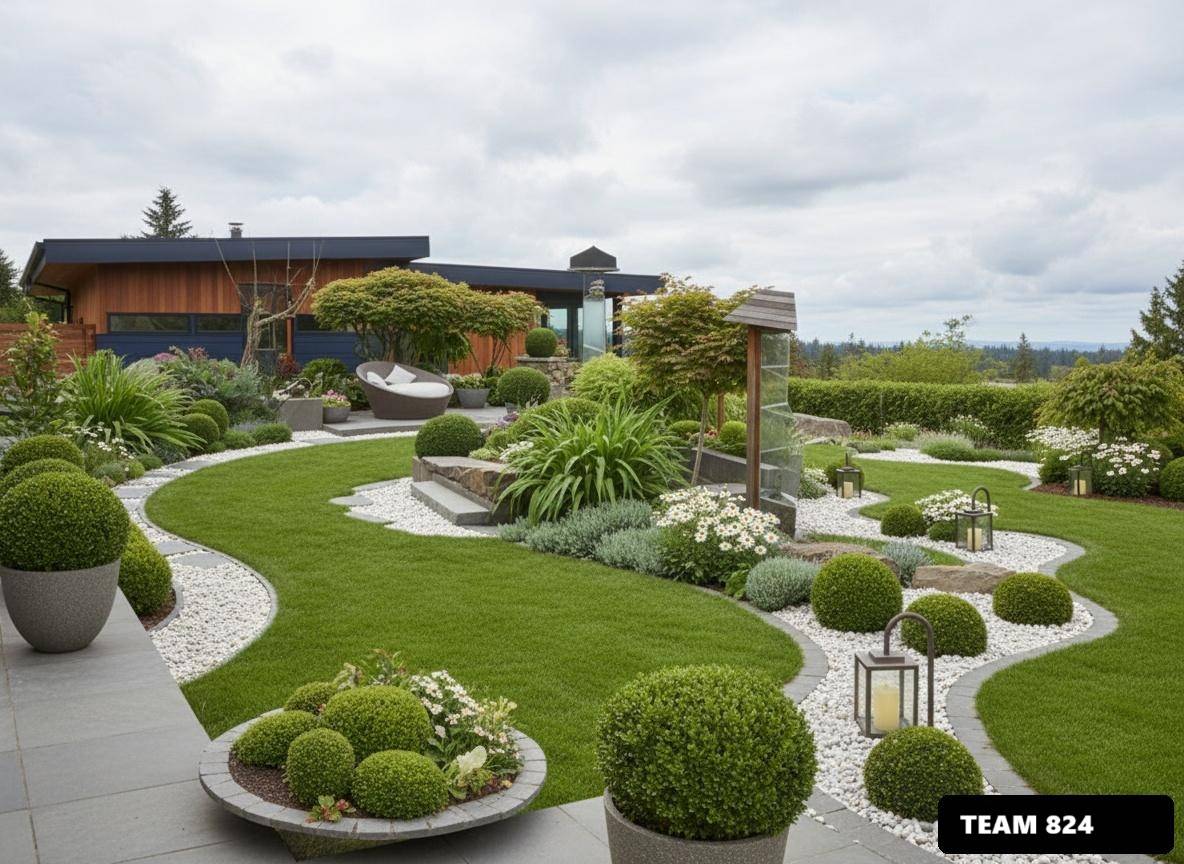
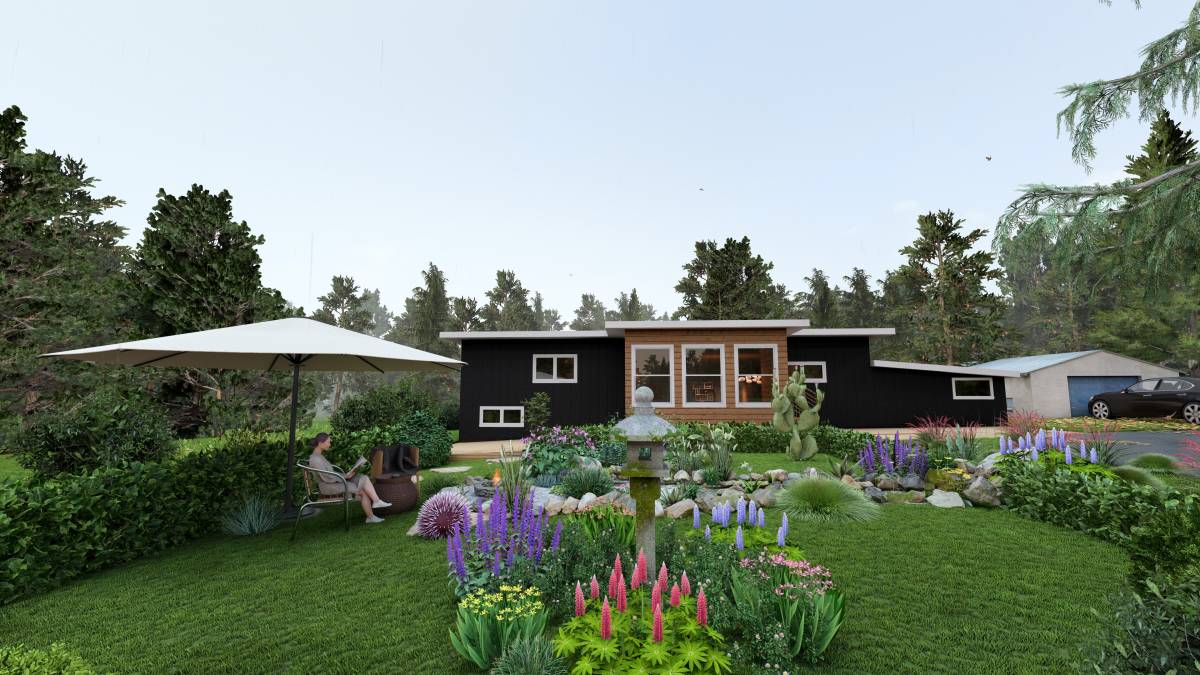
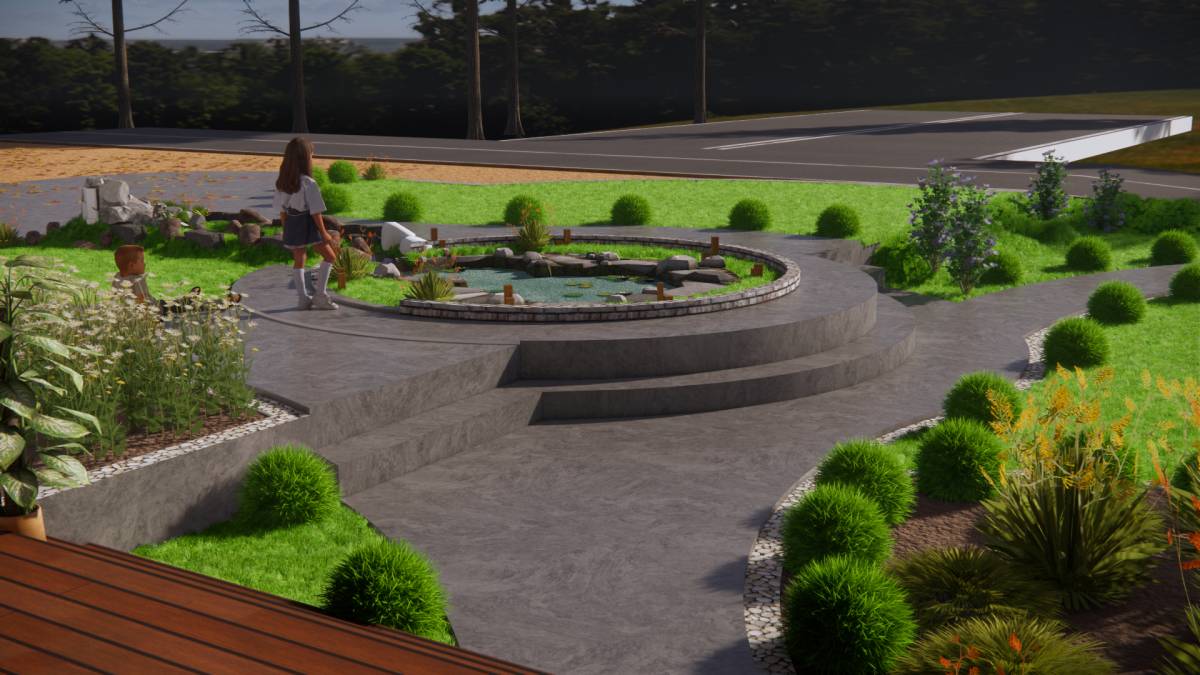
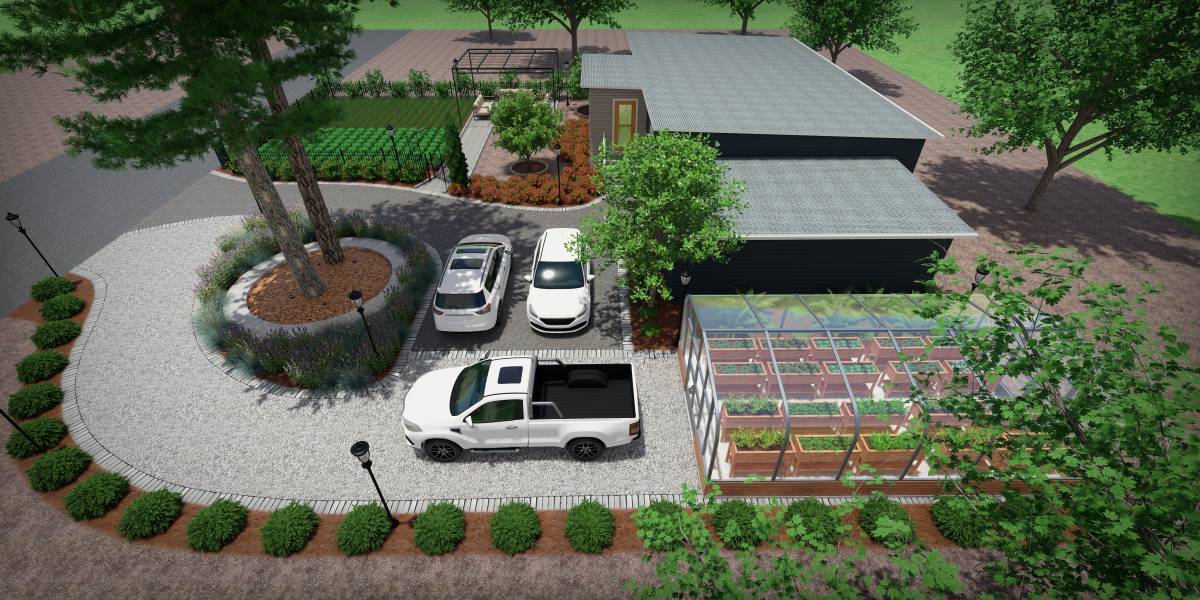
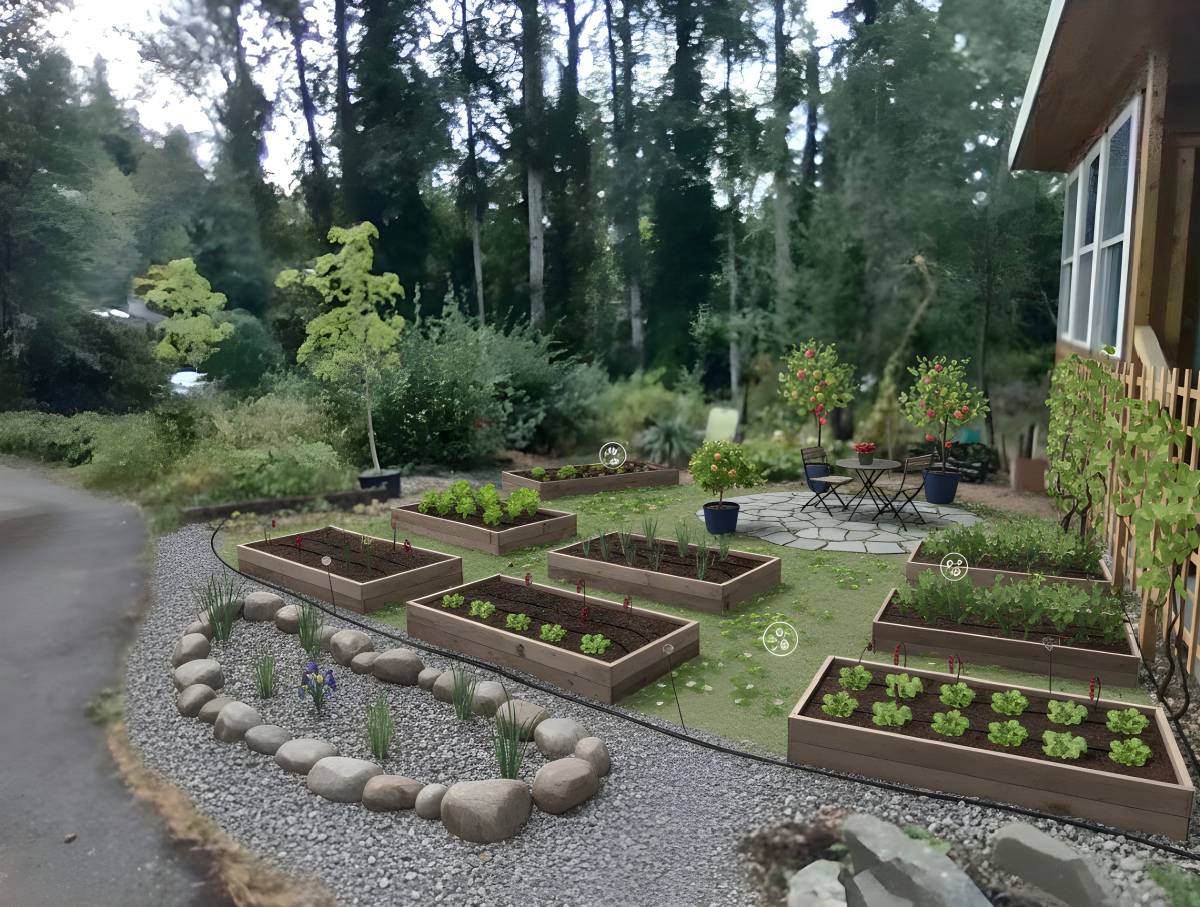
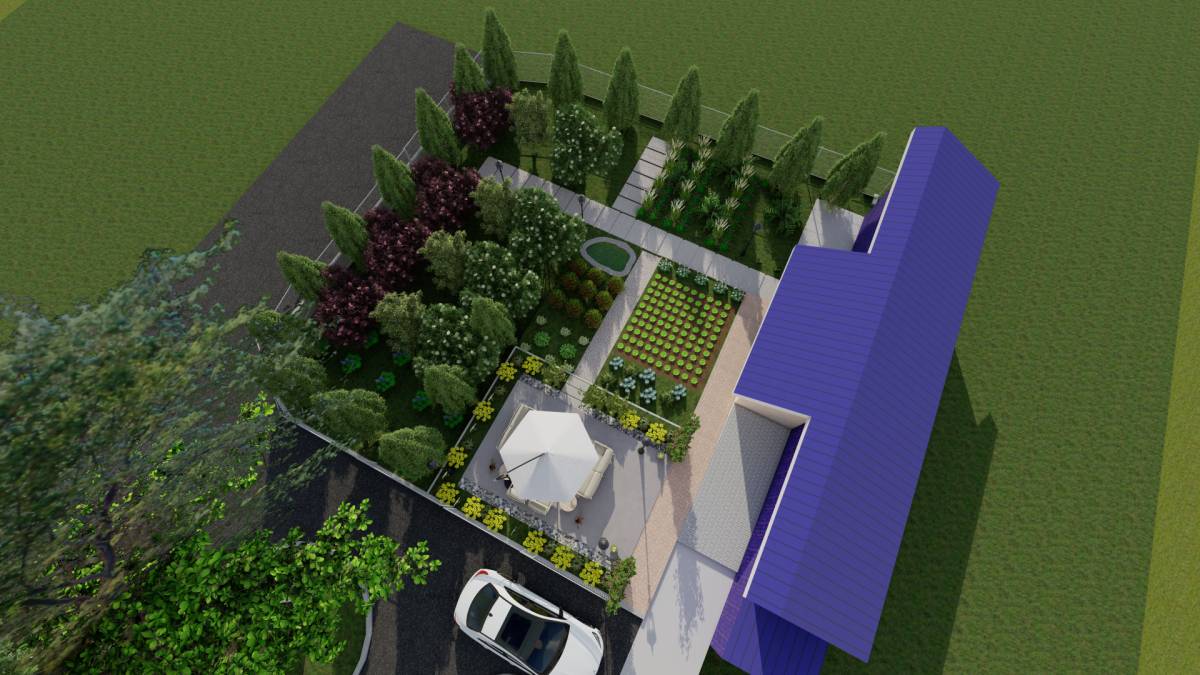
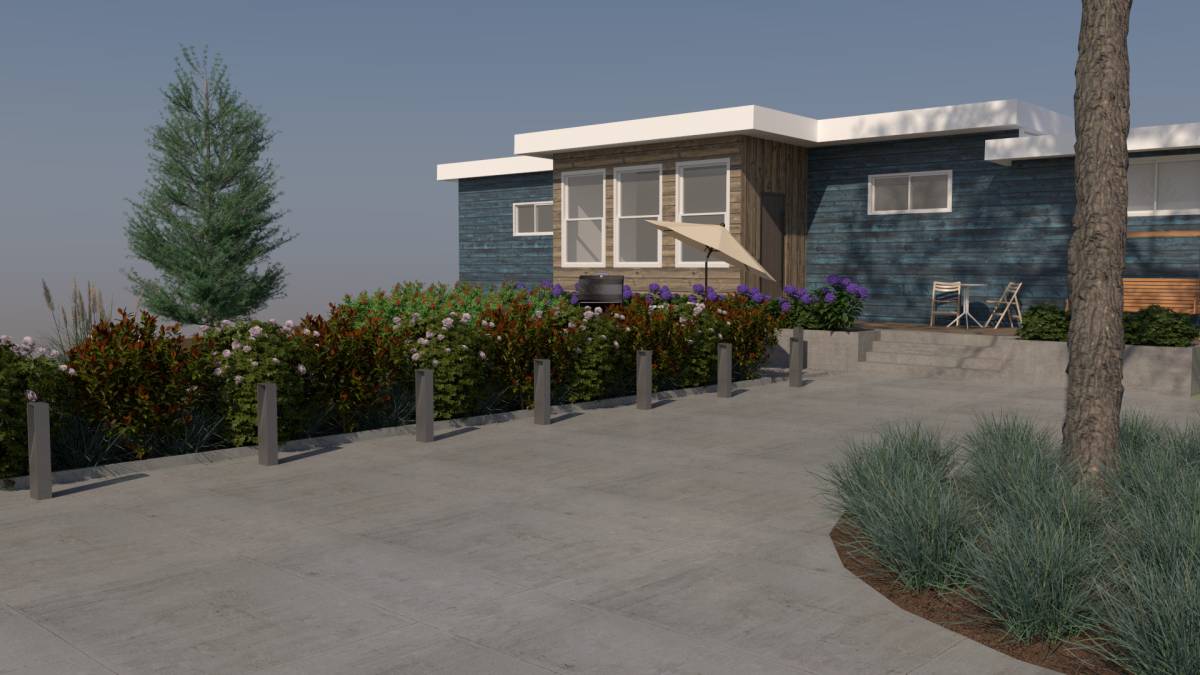
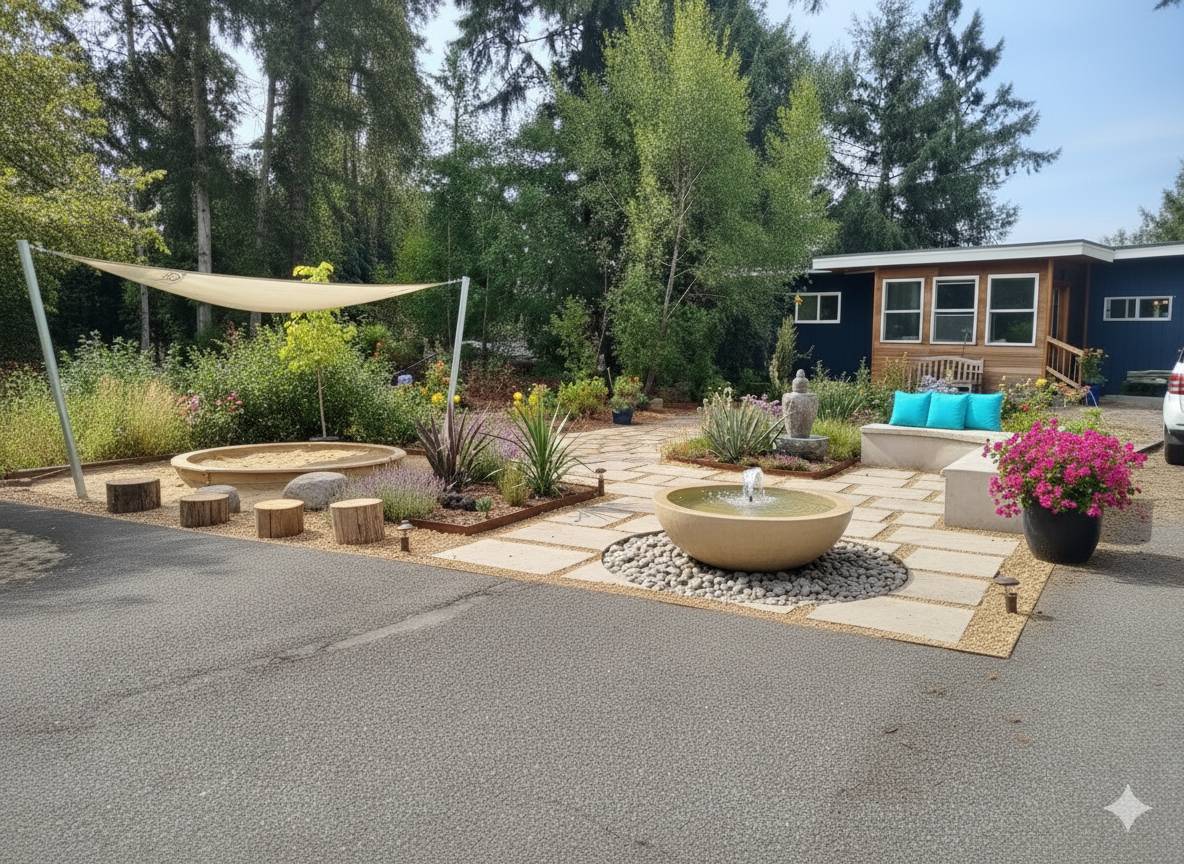
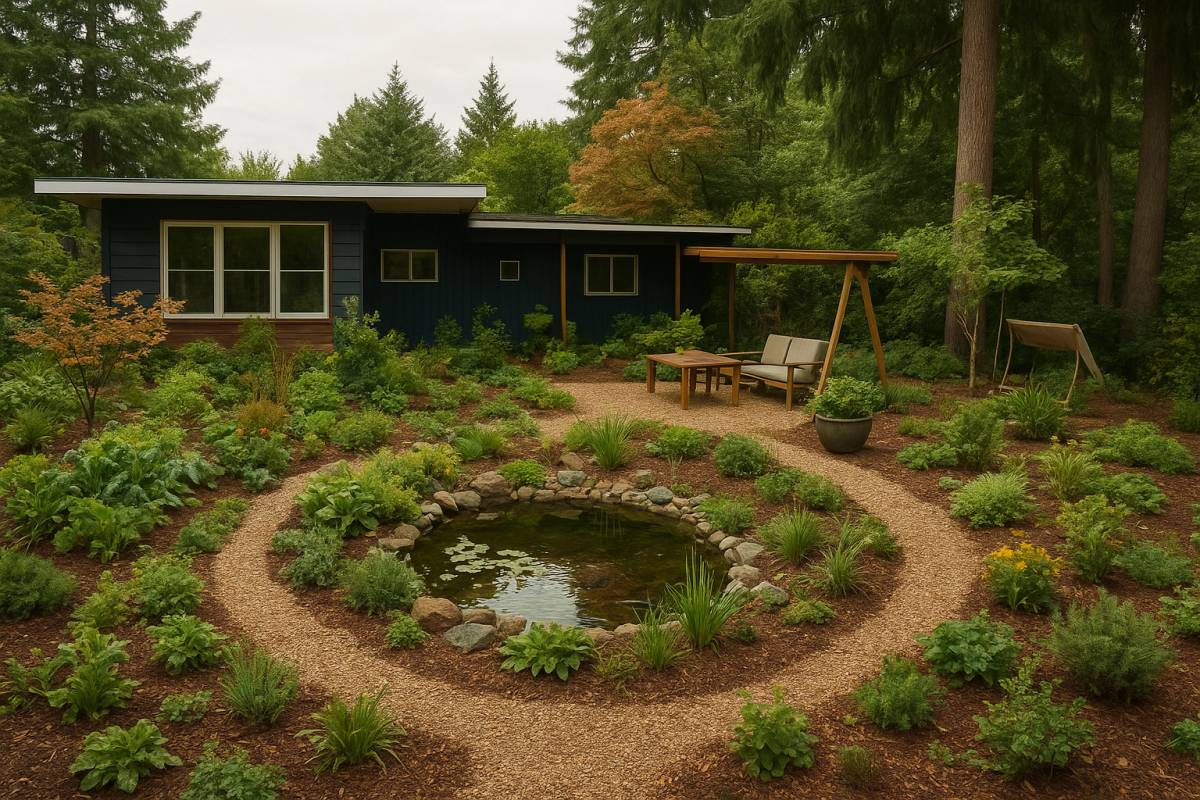
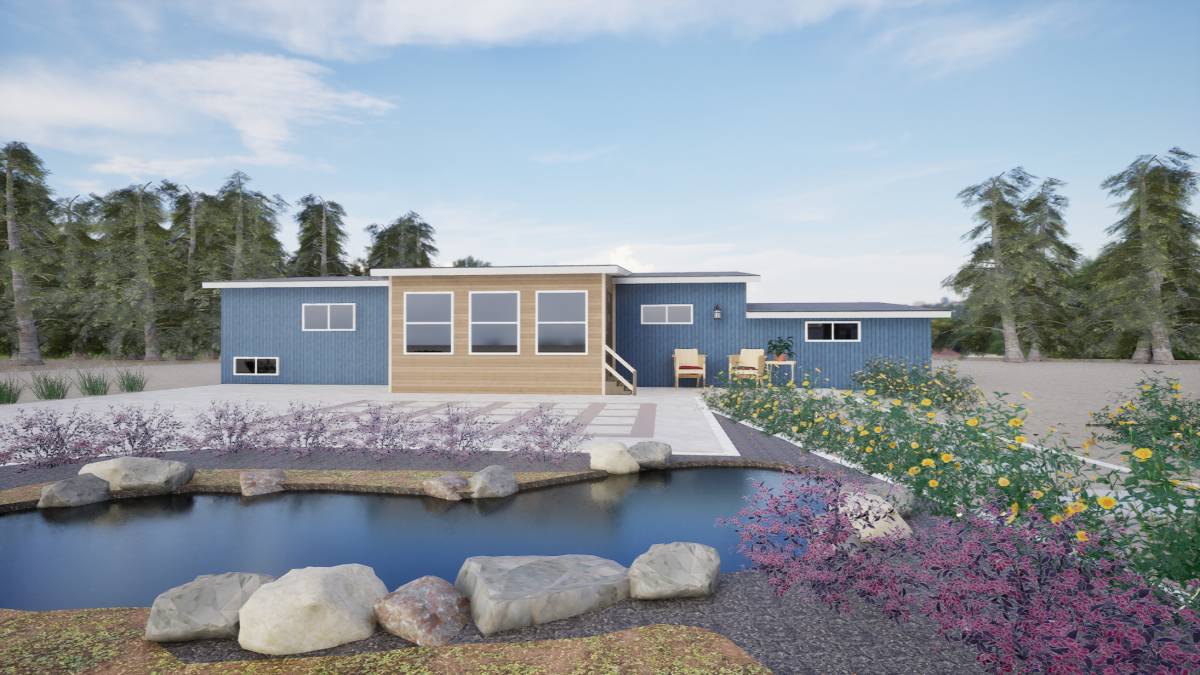
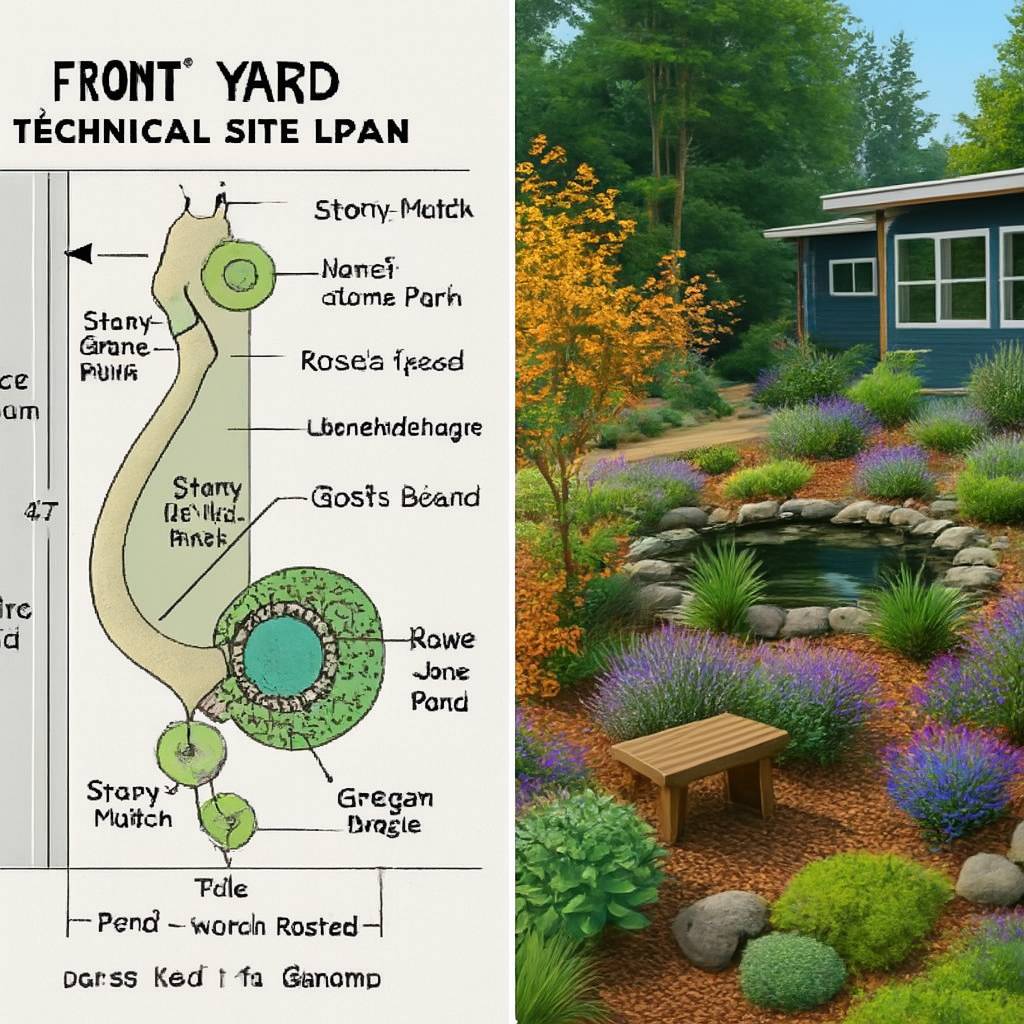
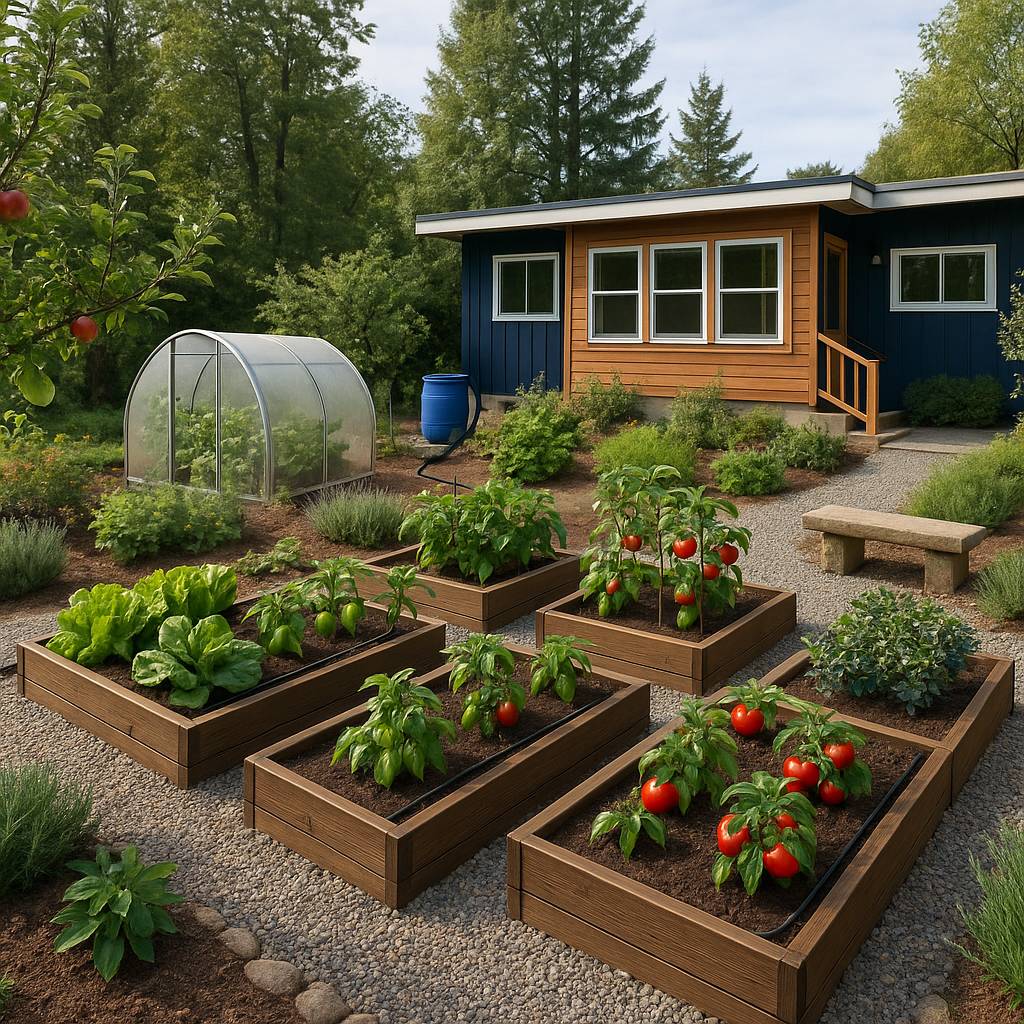
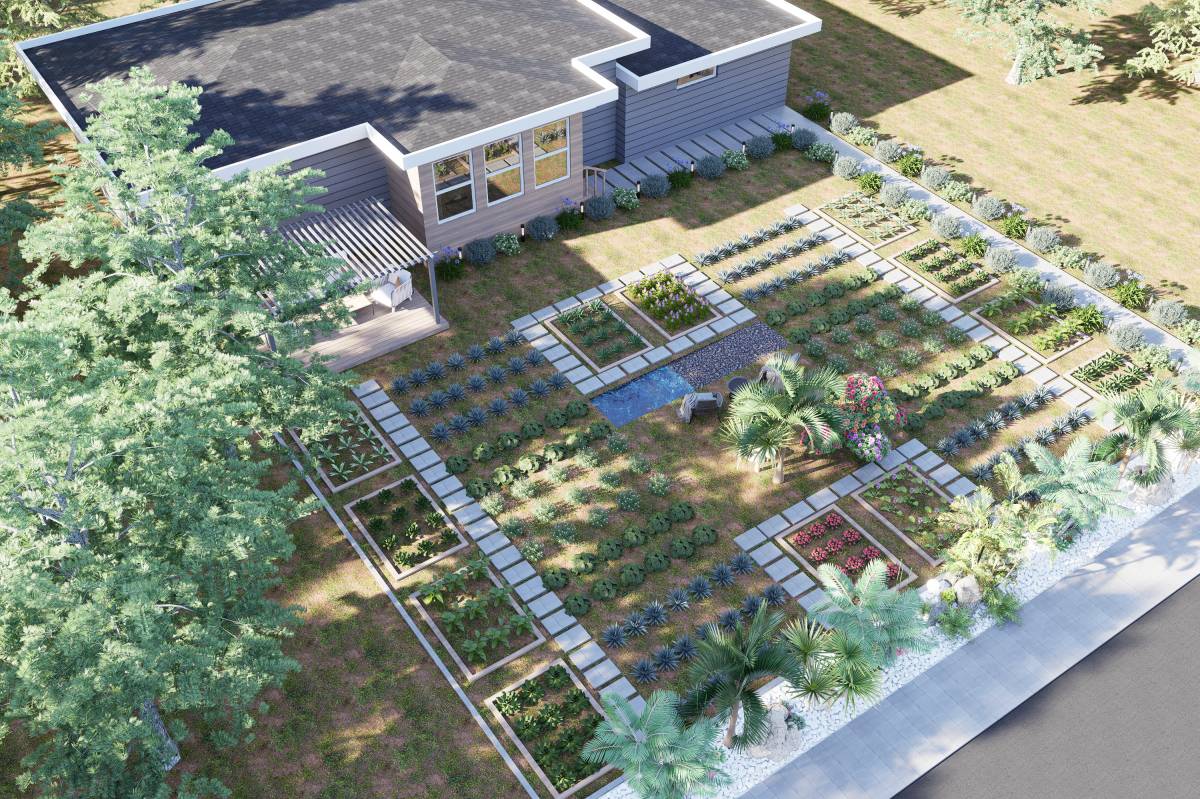
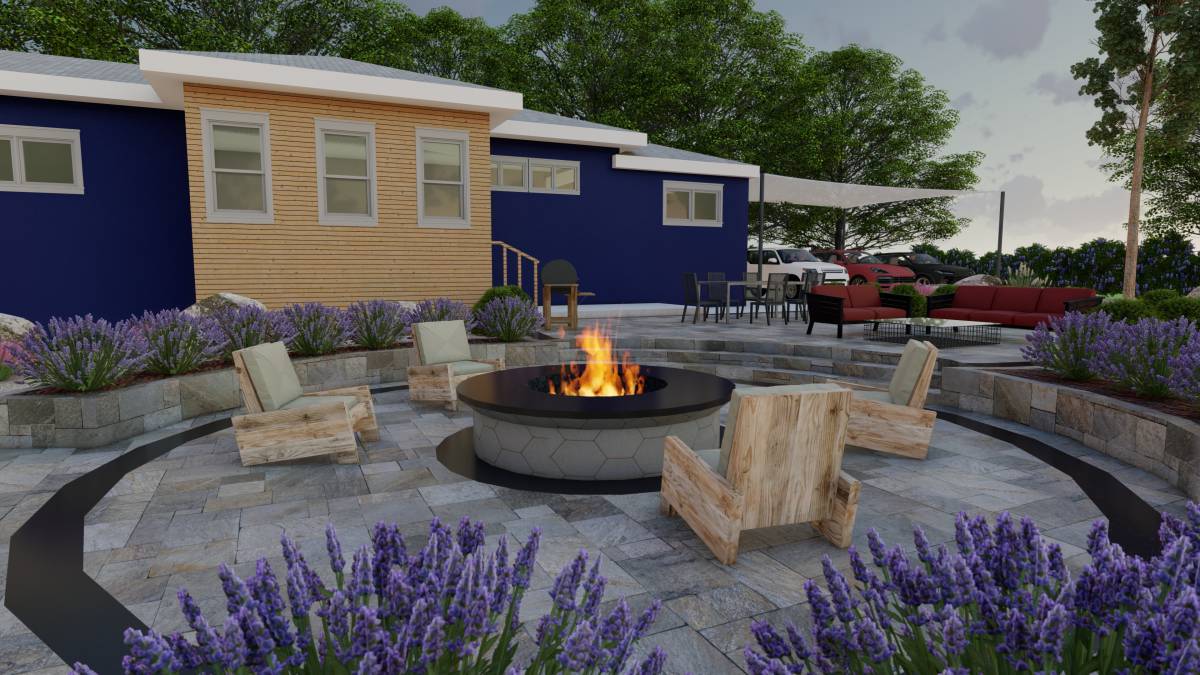
Here's a landscape design sketch for your front yard, focusing on native Pacific Northwest plants for beauty, food, and environmental benefit. The design aims for a permaculture approach, creating distinct zones that blend harmoniously.
Overall Concept:
The design establishes a welcoming entry, transitions into a biodiverse food forest, and leverages existing large trees for a serene, shaded understory. Pathways invite exploration, and all plantings are chosen for their adaptability to the PNW climate and soil.
Zones and Plantings:
Entry Garden / Pollinator Welcome (Foreground, left to center):
Description: This area provides immediate visual appeal and attracts pollinators. It transitions from full sun to partial shade closer to the house.
Plants:
A. Oregon Grape (Mahonia aquifolium): Evergreen shrub, yellow flowers in spring, edible berries, good for structure. (Partial sun)
B. Salal (Gaultheria shallon): Evergreen shrub, white/pink flowers, edible berries, excellent groundcover/understory. (Partial sun to shade)
C. Coastal Strawberry (Fragaria chiloensis): Edible groundcover, white flowers, small red berries. (Full sun to partial shade)
D. Camas (Camassia quamash): Spring-blooming bulb with striking blue-purple flowers. (Full sun)
E. Blueberry (Vaccinium ovatum/corymbosum 'native varieties'): Deciduous shrubs, white/pink flowers, delicious edible berries. (Full sun to partial sun)
Food Forest & Permaculture Zone (Center to mid-right):
Description: This is the heart of the productive landscape, designed with multiple layers to maximize yield and biodiversity.
Plants:
F. Serviceberry (Amelanchier alnifolia): Small tree/large shrub, white flowers, edible berries, beautiful fall color. (Full sun to partial sun)
G. Nootka Rose (Rosa nutkana): Deciduous shrub, pink flowers, edible rose hips, excellent wildlife habitat. (Full sun to partial sun)
H. Red-twig Dogwood (Cornus sericea): Deciduous shrub, white flowers, red stems provide winter interest. (Full sun to partial sun)
I. Evergreen Huckleberry (Vaccinium ovatum): Evergreen shrub, edible berries, good in various light conditions. (Partial sun to shade)
J. Sword Fern (Polystichum munitum): Iconic PNW evergreen fern, provides texture and structure. (Partial shade to full shade)
K. Elderberry (Sambucus racemosa/cerulea): Fast-growing shrub, white flowers, edible berries (cooked). (Full sun to partial sun)
Shaded Woodland Edge (Under large existing trees, far right):
Description: This area embraces the deep shade, creating a cool, naturalistic retreat.
Plants:
L. Deer Fern (Blechnum spicant): Smaller, delicate evergreen fern, thrives in deep shade. (Full shade)
M. Wild Ginger (Asarum caudatum): Heart-shaped leaves, shade-loving groundcover. (Full shade)
N. Vanilla Leaf (Achlys triphylla): Distinctive fan-shaped leaves, fragrant, shade-loving groundcover. (Full shade)
O. Pacific Dogwood (Cornus nuttallii): Native flowering tree (if space allows), beautiful white bracts. (Partial shade)
Additional Elements:
P. Pathways: Winding pathways made of wood chips or permeable gravel connect the different zones, inviting exploration and providing access for harvesting and maintenance.
Q. Mulch: A generous layer of wood chip mulch covers all planting beds to suppress weeds, retain moisture, and build soil health over time.
R. Existing Trees: Integrate the large existing trees into the design, utilizing their shade and vertical structure.
S. Outdoor Living: Suggest a small, permeable patio or seating area near the house entrance, perhaps with container herbs or small edibles.
Irrigation: Plan for a drip irrigation system to efficiently water new plantings, especially during establishment. Consider rainwater harvesting.